
From Waste to Wonder: The Journey of Sugarcane Bagasse Plates

Introduction
In today’s food industry, many places use disposable tableware. These places are restaurants, food trucks, and catering services.
But normal plastic, foam, or coated paper products harm the environment. So people are looking for better options. That is why eco-friendly choices are now popular.
Sugarcane bagasse plates are one good example.

This article will explain how these plates are made. It will also show their benefits. And it will tell why they are becoming a favorite choice in the United States.
What Is Sugarcane Bagasse?
Sugarcane bagasse is the fibrous by-product left after extracting juice from sugarcane during sugar production. Instead of discarding it or burning it for fuel, manufacturers now use it as a renewable raw material for making compostable dinnerware and packaging.

Chemically, bagasse contains about 45–55% cellulose, 20–25% hemicellulose, and 18–24% lignin — all plant fibers that provide strength and structure. Since bagasse comes from a waste stream rather than newly harvested crops or trees, it offers high resource efficiency and reduces deforestation pressure.
Why Sustainable Dinnerware Matters
The U.S. is passing more laws that limit single-use plastics and foam packaging. And consumers also want greener dining options, so they ask for compostable cups and biodegradable tableware.
Traditional disposable plates are made from polystyrene or coated paper. These create a lot of carbon emissions, landfill waste, and water pollution. But plant-based options, like bagasse, are different. They help businesses lower their environmental impact, follow local rules, and build trust through sustainability.
From Waste to Plate: The Production Process
Harvesting Sugarcane
Sugarcane grows quickly and it regenerates without replanting. So it is much more sustainable than logging trees for pulp. Each ton of crushed sugarcane produces about 270 kg of bagasse. So there is plenty of material for making eco-tableware.
Extracting and Cleaning the Bagasse
After the sugar is taken out, the fibrous leftover is collected and it is washed. This removes leftover sugar and dirt. Then it is dried and it is ground into fine fibers. These fibers are good for pulping.
Pulping and Molding
The cleaned bagasse is mixed with water to make a pulp. This pulp is put into high-pressure molds to shape it into plates, bowls, or trays. Natural lignin in the fibers works like a glue. So no artificial adhesives are needed.

Molding process of biodegradable sugarcane bagasse plates Drying, Trimming, and Quality Testing
The newly molded plates are dried in an oven to take out the moisture. Then they are trimmed to make the edges smooth. Each batch is tested for heat resistance, oil and water resistance, and food safety. This includes FDA, heavy-metal, and PFAS-free testing.
Benefits of Sugarcane Bagasse Plates
Eco-Friendly and Fully Biodegradable
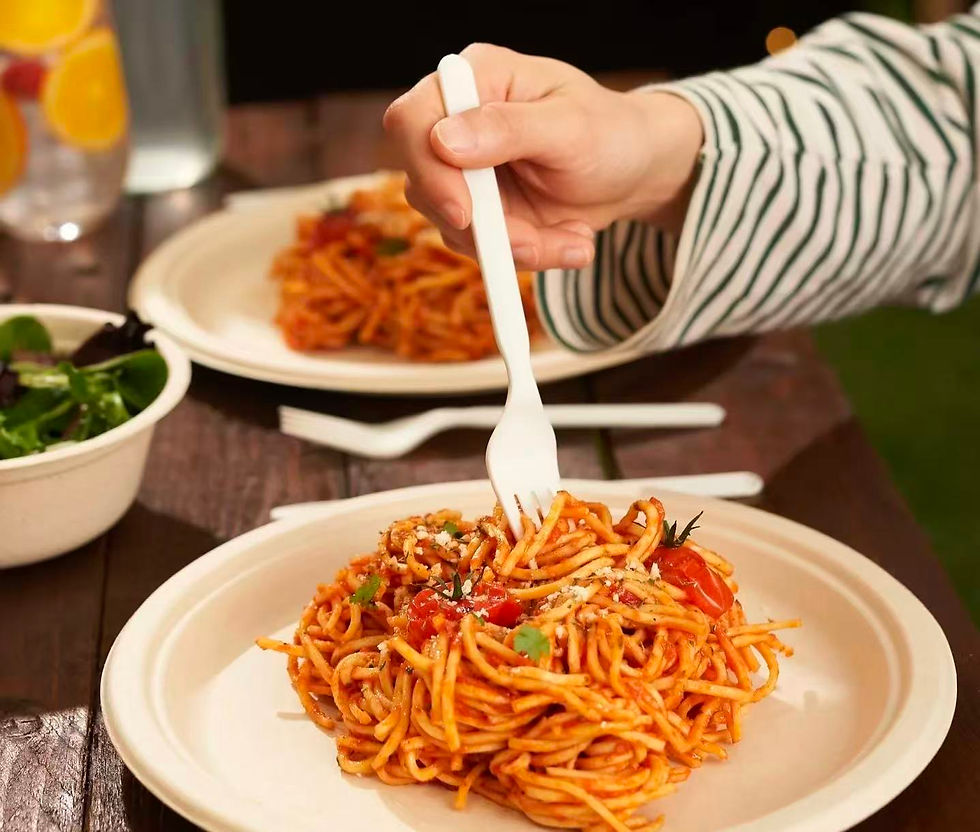
Bagasse plates are certified compostable dinnerware. They break down into organic matter under industrial composting conditions. This is different from traditional plastic, which lingers for centuries.
Recent market data values the global sugarcane-based packaging market at $352 million (2024). Its growth is projected at 9.7% CAGR from 2025–2030. This shows strong adoption across hospitality and food-service sectors.
Strength and Durability
Bagasse plates are plant-based, but they hold up well under heat and moisture. They are microwave-safe and oil-resistant. They are also sturdy enough for hot meals. This makes them ideal for restaurants, food trucks, and catering.
Versatility in Food-Service Disposables
Bagasse can be molded into different forms. These include round dinner plates, compartment trays, deep bowls, and clamshell containers. It works for dine-in, takeout, and delivery. Custom branding and embossing options are also available for businesses.

Eco-Friendly Biodegradable Tableware Made from Sugarcane Bagasse U.S. Market Relevance
U.S. states are tightening plastic restrictions. Also, major restaurant chains are committing to compostable packaging. So, sugarcane bagasse plates are becoming a sustainable choice. They are also becoming a compliance necessity and a brand differentiator.
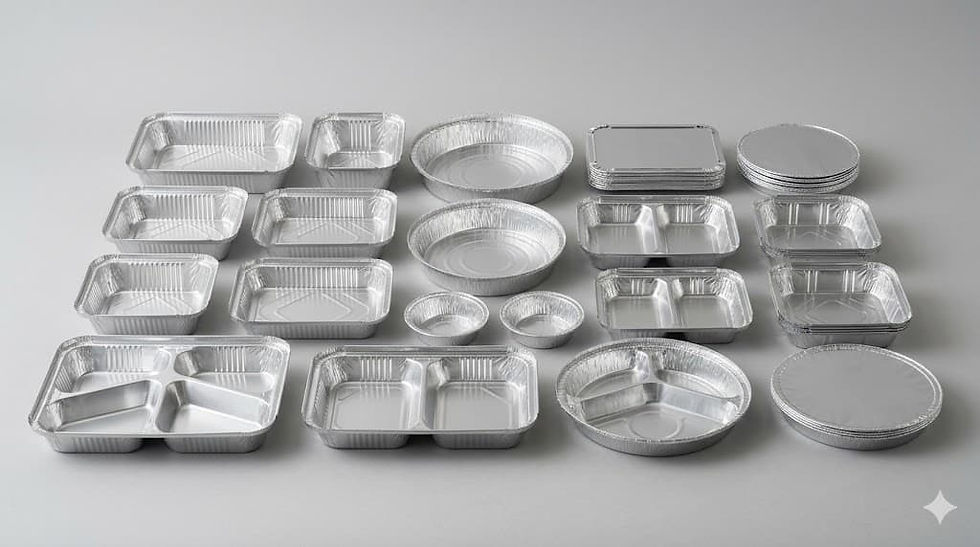
Comparing Sugarcane Bagasse with Traditional Disposable Plates

While bagasse may cost marginally more upfront, it delivers higher brand value, better environmental performance, and alignment with emerging waste-management standards — a tradeoff most sustainable businesses now welcome.
Why Choose Sugarcane Bagasse Plates for Your Business
Switching to bagasse-based disposables helps your business:
Comply with state plastic bans and city composting initiatives.
Enhance brand perception as a sustainability-driven company.
Reduce landfill contribution and carbon emissions.
Meet customer expectations for greener packaging.
Certifications to Look For
When you buy bagasse plates, check that they are:
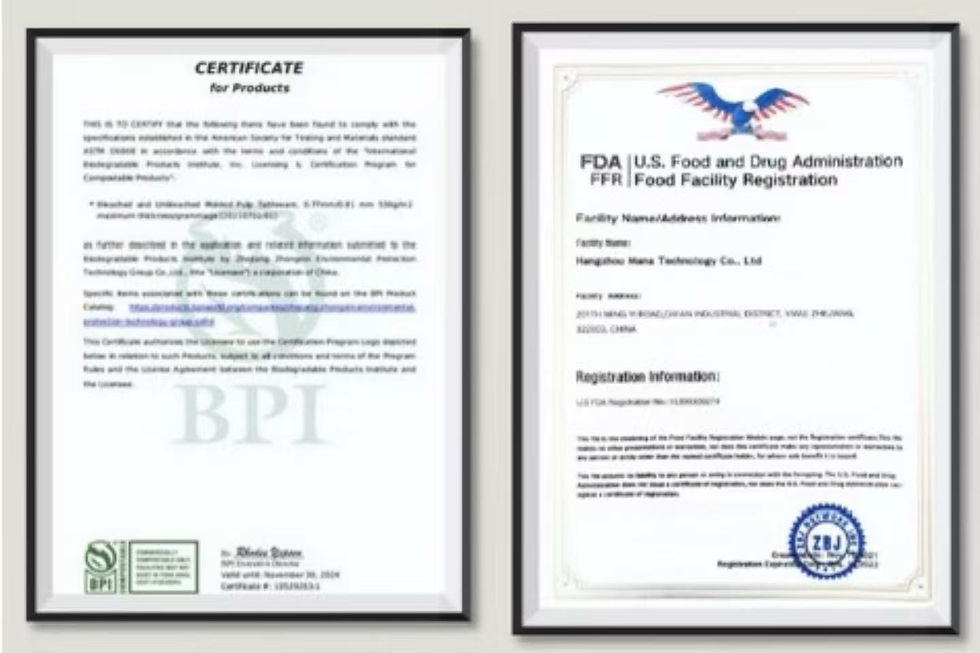
BPI Certified Compostable (U.S.)
OK Compost Certified (EU.).
FDA-approved for food contact
PFAS-free( no forever chemicals)
Market Outlook
Governments and companies are working toward carbon-neutral goals, so biodegradable tableware will become more common.
Businesses that switch early will be ready for new rules and can build customer loyalty.
FAQ
Q1: Can I compost sugarcane bagasse plates at home?
Most are for industrial composting, so they break down best with high heat. In a backyard compost bin, they will take longer to break down.
Q2: Are bagasse plates microwave-safe?
Yes, most bagasse plates are microwave-safe for short times.
But you should always follow the maker's instructions so they don't warp from too much heat.
Q3: How are bagasse plates different from PLA (plant-based plastic) plates?
PLA is a bio-plastic from corn starch, but bagasse is just plant fiber. PLA looks like plastic and needs special places to compost. Bagasse breaks down naturally and is better for hot, oily foods.
Q4: Are all sugarcane bagasse plates equally sustainable?
No. Quality is different. You should always check for a compostable label, make sure it is PFAS-free, and see that no plastic is added.
Q5: Will prices decrease as production scales?
Yes. Because demand is growing and making them is more efficient, bagasse plate prices are going down. Also, environmental rules are getting stricter.
Conclusion
Sugarcane bagasse was once a thrown-away product. Now it is a powerful tool to fight plastic waste. These plates show the ideas of circular design and sustainability.
They are strong, safe, and stylish. They are also compostable. This proves that the future of disposable plates does not have to be plastic.
If you run a restaurant, catering service, or an eco-brand in the U.S., you should think about switching to these plates. This is not just a sustainable move. It is a smart one.

We specialize in a full range of disposable tableware. With fully automated production lines and certifications like FDA, BPI, and OK Compost, we offer high-quality, eco-friendly tableware made from biodegradable materials such as sugarcane bagasse and PLA, committed to providing customers with more sustainable and environmentally friendly options.
Email: abel@mana-eco.com WhatsApp: +86 13867471335


Comments