
Discover the Benefits of Eco Friendly Disposable Tableware for Your Next Event

Introduction to Eco Friendly Disposable Tableware

In the United States, disposable tableware is no longer judged only by price or convenience. Buyers are increasingly asking the same question: what happens after the plate is thrown away? These buyers can be event planners, foodservice operators, or families who care about the environment.
Eco friendly disposable tableware answers that question. These products are made to reduce environmental impact. They still work well and look good. They are different from traditional plastic or foam products. They are made from renewable or reclaimed materials. They are made to compost, biodegrade, or return safely to nature.
This shift is driven by personal values. It is also driven by state rules, company goals, and people knowing more about waste.
Importance of Sustainable Choices
Single-use products make up a visible portion of landfill waste in the U.S., especially after large gatherings such as weddings, festivals, or corporate events. While reusable tableware is ideal in theory, it is not always practical for large-scale or outdoor events. Eco friendly disposable tableware offers a realistic middle ground.
Choosing sustainable tableware helps:
Reduce long-term landfill volume
Lower dependence on fossil-fuel-based plastics
Support composting infrastructure
Improve brand perception for businesses and events
More importantly, it allows hosts to align convenience with responsibility rather than choosing one over the other.
Overview of Eco Friendly Options
Eco friendly disposable tableware is not just one thing. It has many kinds of materials and ways to make it. It also has different ways to be disposed of. Knowing these differences helps buyers avoid greenwashing. And it helps them pick products that fit their goals for the environment.
The most common choices in the U.S. market are compostable plates made from plant fibers. Another choice is palm leaf plates made from fallen leaves. There is also biodegradable tableware that breaks down naturally if the conditions are right.
Types of Eco Friendly Disposable Tableware
Compostable Plates
Compostable plates are among the most widely adopted forms of eco friendly disposable tableware, particularly in commercial and institutional settings.
Materials Used

Most compostable plates are made from agricultural byproducts or rapidly renewable resources, such as:
Sugarcane bagasse (the fibrous residue left after juice extraction)
Bamboo pulp
Wheat straw
Corn-based biopolymers (PLA coatings)
These materials are typically molded under heat and pressure without the need for synthetic plastics.
Benefits of Compostable Plates
Compostable plates are designed to fully break down in commercial composting facilities, usually within 90–180 days. Key advantages include:
Oil and grease resistance suitable for hot foods
Microwave-safe options for reheating
Consistent sizing and shape for large-scale events
Compatibility with foodservice regulations
A lesser-discussed benefit is waste stream simplification. When food scraps and plates can be composted together, cleanup becomes faster and less labor-intensive.
Palm Leaf Plates
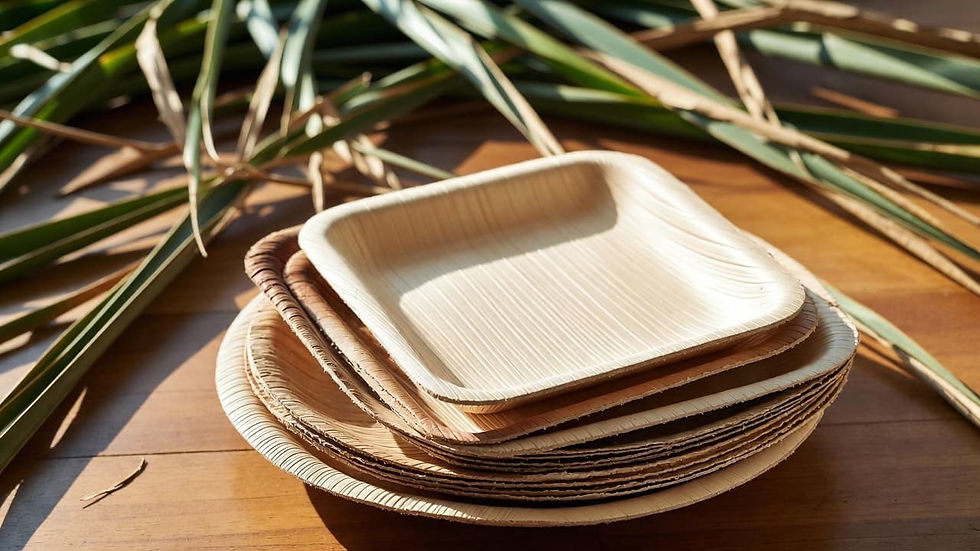
Palm leaf plates occupy a unique niche within eco friendly disposable tableware because they require minimal processing.
Production Process
Palm leaf plates are made from naturally fallen areca palm leaves. These leaves are collected, washed, heat-pressed into shape, and trimmed. No trees are cut, and no chemical additives are required.
This low-intervention process gives palm leaf plates their distinctive natural texture and grain.
Environmental Impact
Because palm leaf plates are essentially repurposed agricultural waste, their carbon footprint is often lower than molded fiber products. They are:
Home compostable in many climates
Free from coatings and binders
Naturally sturdy for heavier meals
However, they are less uniform in appearance, which may not suit highly formal or branded events.
Biodegradable Tableware
The term “biodegradable tableware” is broad and sometimes misunderstood.
What Makes It Biodegradable?
Biodegradable tableware refers to products that can break down through natural biological processes. This includes materials such as:
Uncoated paper
Certain plant-based fibers
Starch-based composites
The key difference between biodegradable and compostable is control and timeframe. Compostable products are tested to meet specific standards, while biodegradable products may break down more slowly or under less predictable conditions.
How to Choose Quality Options
To avoid misleading claims, buyers should look for:
Third-party certifications (BPI, ASTM D6400, OK Compost)
Clear disposal instructions
Transparency about materials and coatings
Products labeled only as “biodegradable” without supporting documentation should be evaluated carefully.
Benefits of Using Eco Friendly Tableware
Health and Safety Considerations
Eco friendly disposable tableware is usually free from harmful chemicals. These chemicals are common in traditional plastics, like BPA. It also does not have PFAS-based coatings. This means there is less risk of chemicals moving into food. This happens when you serve hot food or acidic food.
For events with children, this safety is important. It is also important in healthcare settings. Health-focused brands care about this too. This safety can be a deciding factor for them.
Reduced Environmental Impact

Compared with conventional plastic or foam products, eco friendly disposable tableware typically:
Uses renewable raw materials
Produces fewer greenhouse gas emissions during manufacturing
Avoids microplastic pollution
The table below highlights typical end-of-life outcomes:
Tableware Type | Typical Material | End-of-Life Outcome | Landfill Persistence |
Plastic Plate | Polystyrene | Landfill | 100+ years |
Foam Plate | EPS | Landfill | 500+ years |
Compostable Plate | Bagasse | Industrial compost | 3–6 months |
Palm Leaf Plate | Areca leaf | Compost / soil | 2–3 months |
Cost-Effectiveness for Events
While eco friendly disposable tableware may have a slightly higher unit cost, total event costs can be lower when factoring in:
Reduced waste handling fees
Faster cleanup
Positive guest perception
For businesses, these indirect benefits often outweigh the price difference.
How to Incorporate Eco Friendly Tableware into Your Event
Planning and Sourcing
First, estimate food types, serving temperatures, and portion sizes. Heavy or saucy meals need sturdier plates. Desserts allow for lighter options.
Work with suppliers. They should clearly share material sources and certifications. This avoids last-minute surprises. It also ensures compliance with local rules.
Presentation and Aesthetics
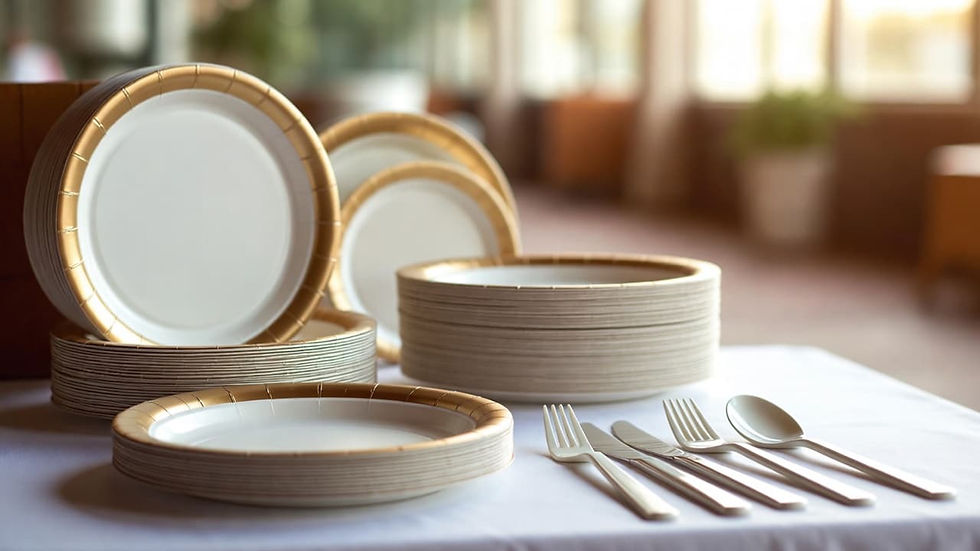
Eco friendly disposable tableware has evolved beyond plain white plates. Options now include:
Natural textures (palm leaf, bamboo)
Minimalist molded fiber designs
Neutral tones that photograph well
This makes them suitable for weddings, corporate functions, and upscale outdoor events.
Eco Friendly Pairings
To maximize impact, pair tableware with:
Paper or fiber napkins
Clearly labeled compost bins
Signage explaining disposal instructions helps guests participate correctly.
Conclusion
Summary of Key Points
Eco friendly disposable tableware offers a practical solution for reducing waste without sacrificing convenience. By understanding material types, certifications, and real-world performance, buyers can make informed decisions that align with both environmental and functional needs.
Encouragement to Make Sustainable Choices
Every event is an opportunity to reduce environmental impact. Choosing eco friendly disposable tableware is a small change that can create measurable benefits—both for the planet and for the people hosting and attending the event.
FAQ
What is the difference between compostable and biodegradable tableware?
Compostable tableware is tested to break down within a specific timeframe in composting conditions, while biodegradable tableware may decompose more slowly and without formal standards.
Are compostable plates safe for hot food?
Yes. High-quality compostable plates made from bagasse or bamboo are designed to handle hot, oily, and moist foods without leaking.
Can palm leaf plates be composted at home?
In many cases, yes. Palm leaf plates can break down in home compost systems, though the timeline depends on moisture and temperature.
Is eco friendly disposable tableware more expensive?
The unit cost is often slightly higher, but overall event costs may be reduced due to easier waste management and cleanup.
How do I know if a product is truly eco friendly?
Look for clear material descriptions, third-party certifications, and transparent disposal instructions. Avoid vague claims without documentation.

Email: abel@mana-eco.com
WhatsApp: +86 13867471335
We specialize in a full range of disposable tableware. With fully automated production lines and certifications like FDA, BPI, and OK Compost, we offer high-quality, eco-friendly tableware made from biodegradable materials such as sugarcane bagasse and PLA, committed to providing customers with more sustainable and environmentally friendly options.


Comments