
How to Choose the Best Disposable Cutlery for Your Catering Business
- abel zhao
- Nov 4, 2025
- 4 min read

Updated: Nov 14, 2025
Running a catering business means every detail matters. This means the food you serve and the utensils your guests use. Disposable cutlery seems like a small thing, but the right choice affects your brand and your costs.
Catering companies in the U.S. want things that work well. They want things that are good for the environment. They want things that save money and look nice. Let's see how to choose the best disposable cutlery for your business.
Understanding Disposable Cutlery
Definition and Types

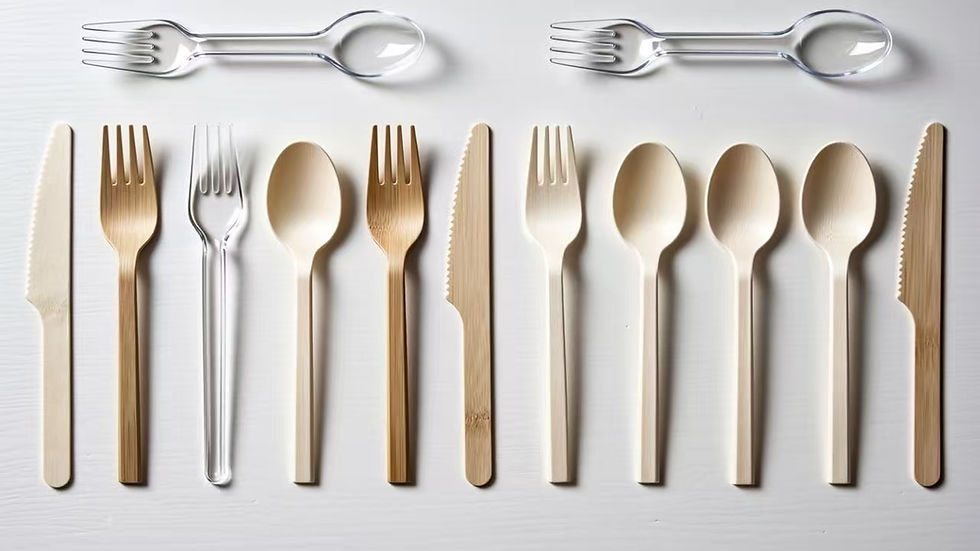
Disposable cutlery means single-use utensils. They are made for convenience and hygiene. You can get forks, spoons, knives, and special tools. These include stirrers and tasting spoons. They come in many materials. Each material helps with different business goals. These goals are controlling costs and being good to the environment.

Benefits for Catering Businesses
For caterers, disposable utensils bring several advantages:
Time Savings: No washing or sanitizing needed.
Mobility: Perfect for off-site events, festivals, and food trucks.
Hygiene: Single-use means less risk of contamination.
Customization: Many suppliers offer branded designs that elevate presentation.
Material Options for Disposable Cutlery
Plastic Cutlery
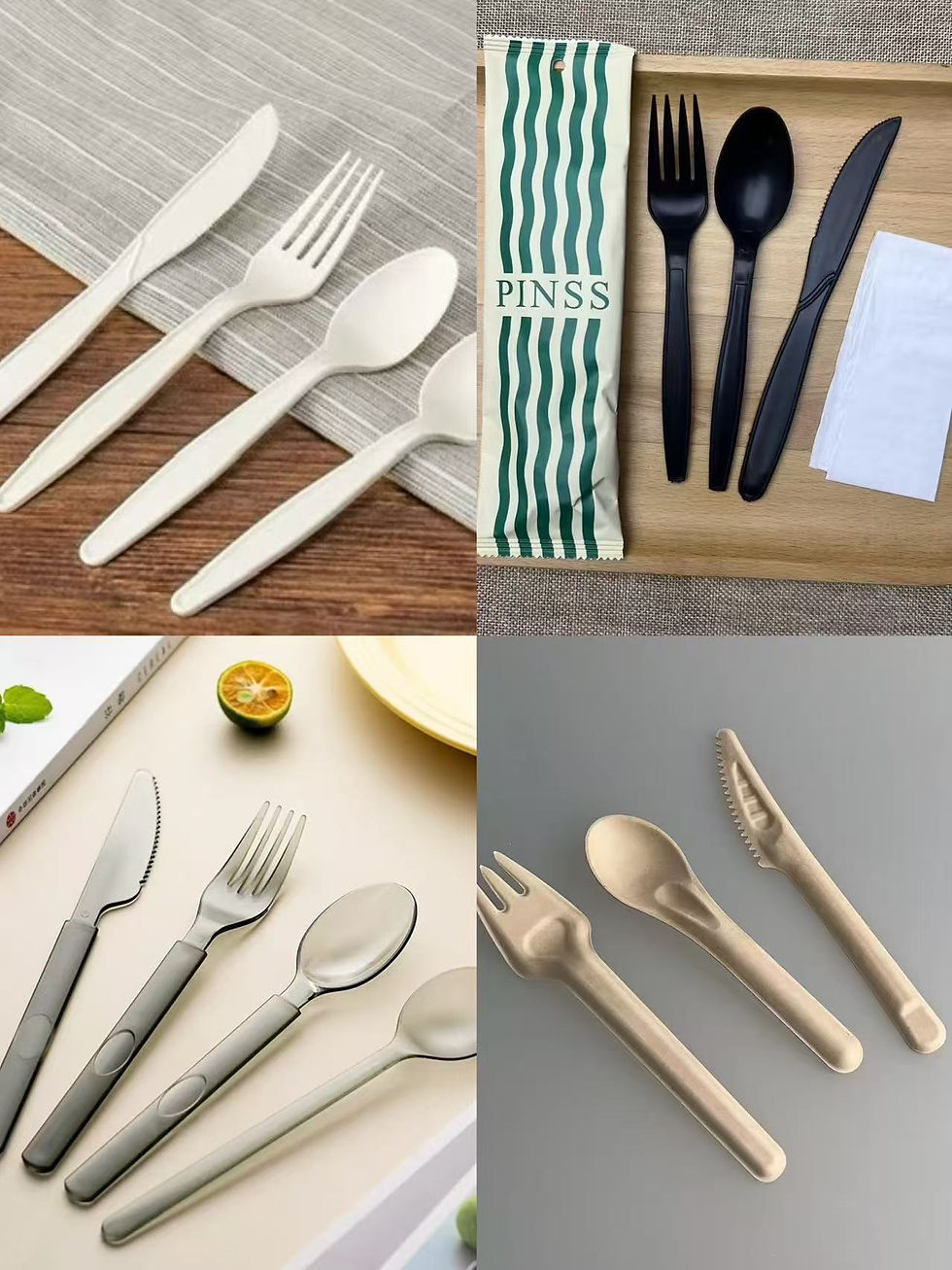
Traditional plastic is made from polystyrene(ps) or polypropylene(pp). It is the cheapest and easiest to find. It is lightweight and waterproof. This is good for caterers watching their budget. But many states now ban these plastics. They are bad for the environment. You should think about other choices.
Non-Disposable Plastic Cutlery
Some caterers work with the same clients again. They might have buffets. For them, Non-Disposable Plastic is a good option. You can wash and use it many times. It saves money in the long run. It also creates much less waste than disposable items.
Compostable Cutlery
Compostable cutlery is becoming more popular. It is made from materials like PLA. It looks like plastic. But it breaks down fast in a composting facility. This is best for caterers who want to be eco-friendly.
Biodegradable Utensils
Biodegradable utensils are another choice. They are made from plants like sugarcane or corn. They do not always need a special facility to break down. For example, bagasse cutlery breaks down in as little as 180 days,. It does not leave harmful waste.
Factors to Consider When Choosing Disposable Cutlery
Sustainability and Environmental Impact
Catering businesses today face growing pressure to reduce their carbon footprint.When evaluating materials, ask:
Is it certified compostable (BPI, OK Compost, or ASTM D6400)?
Does it leave microplastic residue?
Can it be locally composted or recycled?

Pro Tip:Choose suppliers that publish Life Cycle Assessment (LCA) data — it’s a transparent way to compare the true environmental cost of each product.
Cost and Affordability
While compostable or biodegradable cutlery can cost more upfront, consider long-term savings:
Reduced waste disposal fees
Stronger brand image among eco-conscious customers
Potential tax benefits or partnerships with green events

Alt Text:
Design and Functionality
Durability and design should never be overlooked.Look for:
Reinforced handles to prevent breakage.
Heat resistance (especially for hot foods).
Aesthetic appeal matching your catering style — rustic wood for organic menus, or sleek white CPLA for modern dining.
Sourcing and Suppliers
Work with verified suppliers that provide certifications such as FDA, BPI, and OK Compost.Avoid unverified online listings that may mislabel materials.Reliable U.S.-based suppliers often provide:
Material transparency (PLA, bagasse, etc.)
Custom packaging and branding
Stable bulk pricing
Comparing Prices and Quality
Don’t judge by price alone.Request samples before committing to large orders — test for flexibility, sturdiness, and texture.Compare supplier offers in terms of:
Lead time
Shipping costs
Sustainability credentials
If you’re scaling your catering operation, consider long-term contracts with eco-friendly manufacturers to lock in better rates.
Practical Tips for Implementation
Stocking the Right Amount
Calculate what you need. Use the number of guests and the kind of event.Here are examples:
Outdoor event: 1.2 utensils each
Sit-down dinner: 3 utensils eachKeep 20% more for large events. You will not run out during busy times.

Teach Your Staff
Your staff needs to understand:
What can be composted
What can be recycled
How to separate trash at events
How to talk to guests about green products. This makes your business look good.
Helpful Idea:Use bins with clear labels. One bin for compost. One bin for recycling. People will throw things away the right way.
FAQs About Disposable Cutlery
Q1: What is the difference between biodegradable and compostable cutlery?
Compostable cutlery breaks down in special composting facilities. Biodegradable items break down in nature. Biodegradable items take longer.
Q2: Is compostable cutlery safe for hot foods?
Yes. CPLA and bagasse utensils handle heat well. They work for hot soups and meals.
Q3: How do I know if a product is truly eco-friendly?
Look for official stamps. Look for BPI or OK Compost. Do not trust words like "eco" without proof.
Q4: What is the cheapest option for small caterers?
Start with a mixed supply. Use mostly standard plastic. Use some compostable items. Add more eco-friendly items later.
Q5: Can I put my brand on disposable cutlery?
Yes. Suppliers can print your logo. They can engrave bamboo. This shows your brand at events.

Email: abel@mana-eco.com
WhatsApp: +86 13867471335
We specialize in a full range of disposable tableware. With fully automated production lines and certifications like FDA, BPI, and OK Compost, we offer high-quality, eco-friendly tableware made from biodegradable materials such as sugarcane bagasse and PLA, committed to providing customers with more sustainable and environmentally friendly options.
Conclusion
The best cutlery balances cost, quality, and sustainability. Choose materials with care. Check your supplier's information. Plan your inventory well. This lets you serve customers well.
It also shows you care about the environment. In the catering business, details matter. Your cutlery choice says a lot about your brand.


Comments