
Discover the Top 5 Benefits of Using Aluminum Foil for Food Packaging

Introduction

Food packaging is important in the U.S. market. It protects food safety. It also extends shelf life and reduces waste. It makes sure rules are followed. Demand is rising from restaurants and food makers. So packaging must balance performance, safety, cost, and sustainability.
Many options are available today. But aluminum foil for food packaging is still one of the most trusted materials in the U.S. market.
People are interested in biodegradable packaging. But aluminum foil is still essential. This is because it has unmatched barrier properties. It is also versatile and recyclable. It is used in takeout containers and in food processing. Aluminum foil is a reliable solution. Few materials can fully replace it.
Overview of Aluminum Foil for Food Packaging
What Is Aluminum Foil?
Aluminum foil is a thin sheet of aluminum metal. It is usually between 6 and 200 microns thick. It is made to be flexible but strong. For food packaging, it is made under very clean and safe rules. This makes sure it is safe for food.
Why Aluminum Foil Is Widely Used in Food Packaging
Aluminum foil is widely used for many reasons.
First, it gives complete protection. It blocks oxygen, moisture, light, and smells.
Second, it resists high heat well. It stays stable at different temperatures.
Also, it works with many kinds of food.
And, it can be shaped easily. It is used for wraps, trays, lids, and pouches.
Benefit 1: Effective Food Preservation
Moisture, Oxygen, and Light Barrier Properties
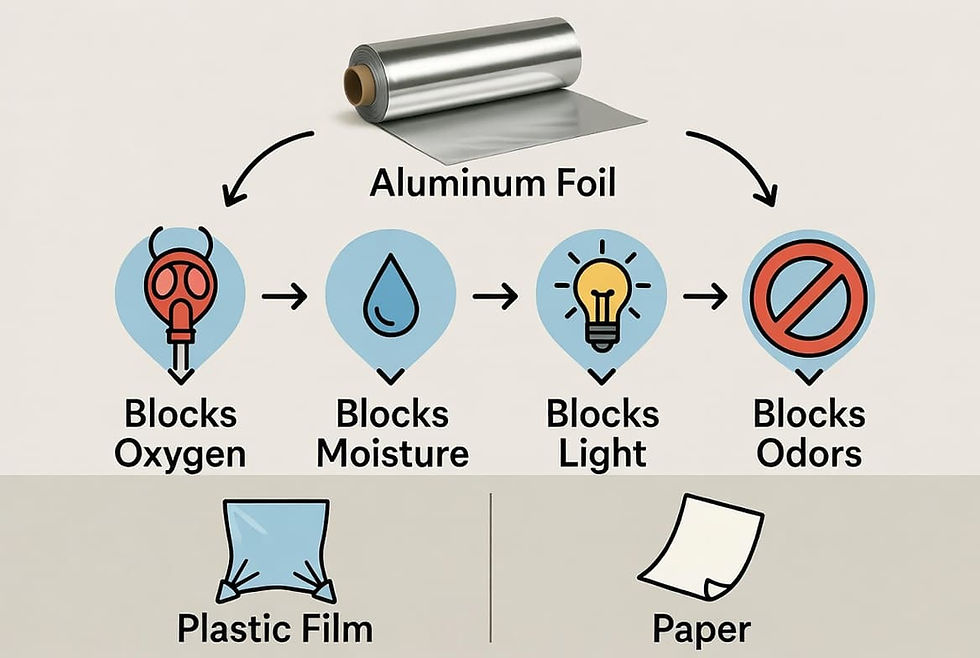
One of aluminum foil’s most valuable characteristics is its near-zero permeability. Unlike plastic films or paper-based packaging, aluminum foil provides a total barrier against:
Oxygen (prevents oxidation)
Moisture (prevents sogginess and microbial growth)
Light (protects light-sensitive foods)
Odors and flavors (prevents cross-contamination)
This makes aluminum foil ideal for packaging meats, dairy, baked goods, ready meals, and sensitive ingredients.
How Aluminum Foil Extends Shelf Life
Below is a simplified comparison of shelf-life performance:
Packaging Material | Oxygen Barrier | Moisture Barrier | Typical Shelf Life Impact |
Aluminum foil | Excellent | Excellent | Longest |
Plastic film | Moderate | Good | Medium |
Paper packaging | Poor | Poor | Short |
By minimizing exposure to external elements, aluminum foil significantly reduces food spoilage and waste.
Benefit 2: Versatility in Food Storage
Applications Across Food Service, Retail, and Manufacturing

Aluminum foil for food packaging is used in:
Restaurants and catering services
Takeout and delivery packaging
Frozen food packaging
Baking and roasting applications
Industrial food processing and bulk storage
Its adaptability allows businesses to use a single material across multiple packaging needs.
Compatibility with Different Foods
Aluminum foil works well with:
Hot and cold foods
Dry, oily, or moist products
Acidic and non-acidic foods (when properly coated)
For acidic foods like tomatoes or citrus-based dishes, coated or laminated aluminum foil is often recommended to enhance safety and performance.
Benefit 3: Microwave-Safe Aluminum Foil — What Most Articles Get Wrong
When Aluminum Foil Is Microwave-Safe
The phrase “microwave-safe aluminum foil” often causes confusion. Aluminum foil can be used safely in microwaves under controlled conditions:
Small, smooth pieces
No sharp edges or crumpled surfaces
Kept away from microwave walls
Many food packaging solutions use aluminum foil as part of microwave-compatible trays or lids designed specifically for controlled heating.
Practical Microwaving Tips
Never tightly wrap food completely in foil for microwaving
Use foil only where manufacturer instructions allow
Combine foil with paper or plastic layers designed for microwave use
Benefit 4: Sustainability and Eco-Friendly Considerations
Aluminum Foil vs Biodegradable Food Packaging

While biodegradable food packaging is gaining popularity, aluminum foil offers different sustainability advantages.
Feature | Aluminum Foil | Biodegradable Packaging |
Barrier protection | Excellent | Limited |
Heat resistance | High | Low–Medium |
Recyclability | Infinitely recyclable | Compostable (conditions apply) |
Infrastructure in U.S. | Mature | Limited |
Aluminum foil does not biodegrade, but it can be recycled repeatedly without loss of quality, making it a valuable material in a circular economy.
Recyclability of Aluminum Foil in the United States
In the U.S., aluminum recycling systems are well-established. Clean aluminum foil can be recycled alongside other aluminum products, reducing landfill waste and conserving energy compared to primary aluminum production.
Benefit 5: Safety and Health Considerations
Food-Safe Aluminum Foil Standards
Food-safe aluminum foil used in packaging must comply with FDA regulations and industry standards. These ensure:
No harmful substances migrate into food
Surface cleanliness and controlled production
Suitable alloy composition for food contact
Avoiding Chemical Leaching Risks
To minimize risks:
Avoid prolonged contact with highly acidic foods unless coated
Do not use damaged or corroded foil
Follow manufacturer usage guidelines
When used correctly, aluminum foil is considered safe for food contact across the U.S. market.
How to Choose the Right Aluminum Foil for Food Packaging
Thickness, Temper, and Coating
Key selection factors include:
Thickness (thicker foil = higher durability)
Temper (soft vs hard)
Coating or lamination for specific food types
Food Service vs Industrial Use
Food service applications often require flexibility and ease of use, while industrial packaging prioritizes strength, consistency, and scalability.
FAQs
Is aluminum foil safe for food storage?
Yes, food-safe aluminum foil is widely used for storage and cooking.
Can aluminum foil be recycled after food use?
Yes, if cleaned of food residue.
Is aluminum foil better than biodegradable food packaging?
It depends on the application. Aluminum foil excels in protection and heat resistance, while biodegradable options focus on compostability.
Can aluminum foil be used in ovens and freezers?
Yes, aluminum foil performs well in both high and low temperatures.
Conclusion
Aluminum foil for food packaging is still important in the U.S. food industry. It blocks air and moisture very well and can be used in many ways. It is safe and can be recycled. So, it is a good choice for businesses. They need good performance and to follow rules. Other kinds of packaging are being developed. But aluminum foil is still important. It keeps food fresh and cuts down on waste.

Email: abel@mana-eco.com
WhatsApp: +86 13867471335
We specialize in a full range of disposable tableware. With fully automated production lines and certifications like FDA, BPI, and OK Compost, we offer high-quality, eco-friendly tableware made from biodegradable materials such as sugarcane bagasse and PLA, committed to providing customers with more sustainable and environmentally friendly options.


Comments